Stop typing up SOAP notes.
VetScribe listens to your consultation, transcribes it, and writes a structured SOAP note and a client-friendly discharge summary. You review, tweak, and move on to the next patient.
Works on the web, iPhone, and Android. Even joins your phone consults.
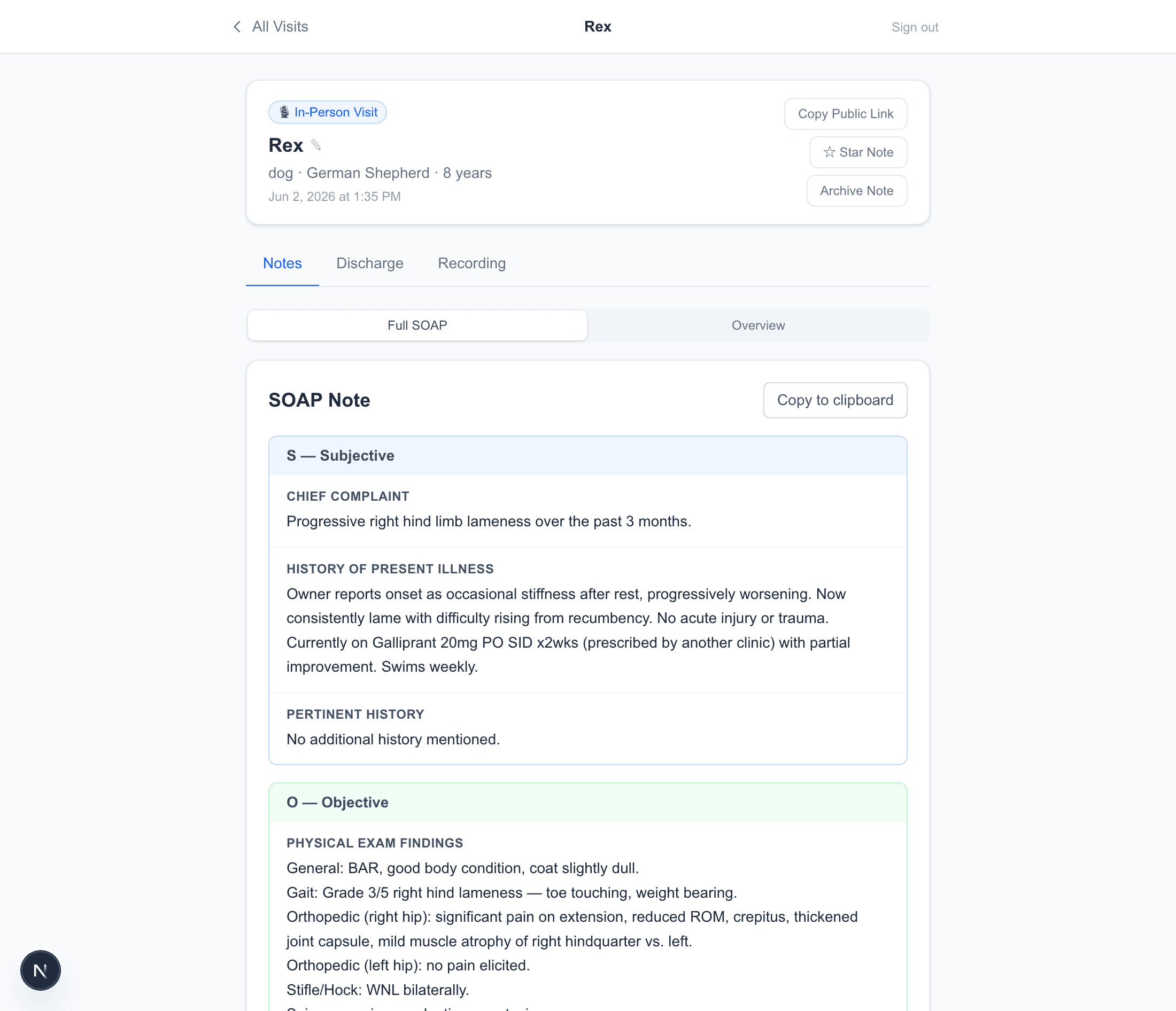
Recording to ready in three steps
No templates, no dictation commands. Just talk like you normally would.
Record
Hit record during the exam on web or mobile, or have VetScribe dial into a phone consult.
Transcribe
The audio is uploaded and turned into an accurate transcript with medical-grade speech-to-text.
Patient is a 4 yo neutered male cat, here for an annual wellness exam.
Generate
Claude writes a structured SOAP note plus a plain-language discharge summary for the owner.
Just talk. VetScribe listens.
Speak naturally through the visit and name the patient, species, breed, age, findings, and your plan whenever it comes up. New to it? Load an example consult and watch a note get built end to end.
- Web, iPhone, and Android
- Multi-pet visits from one recording
- Built-in example consults to try
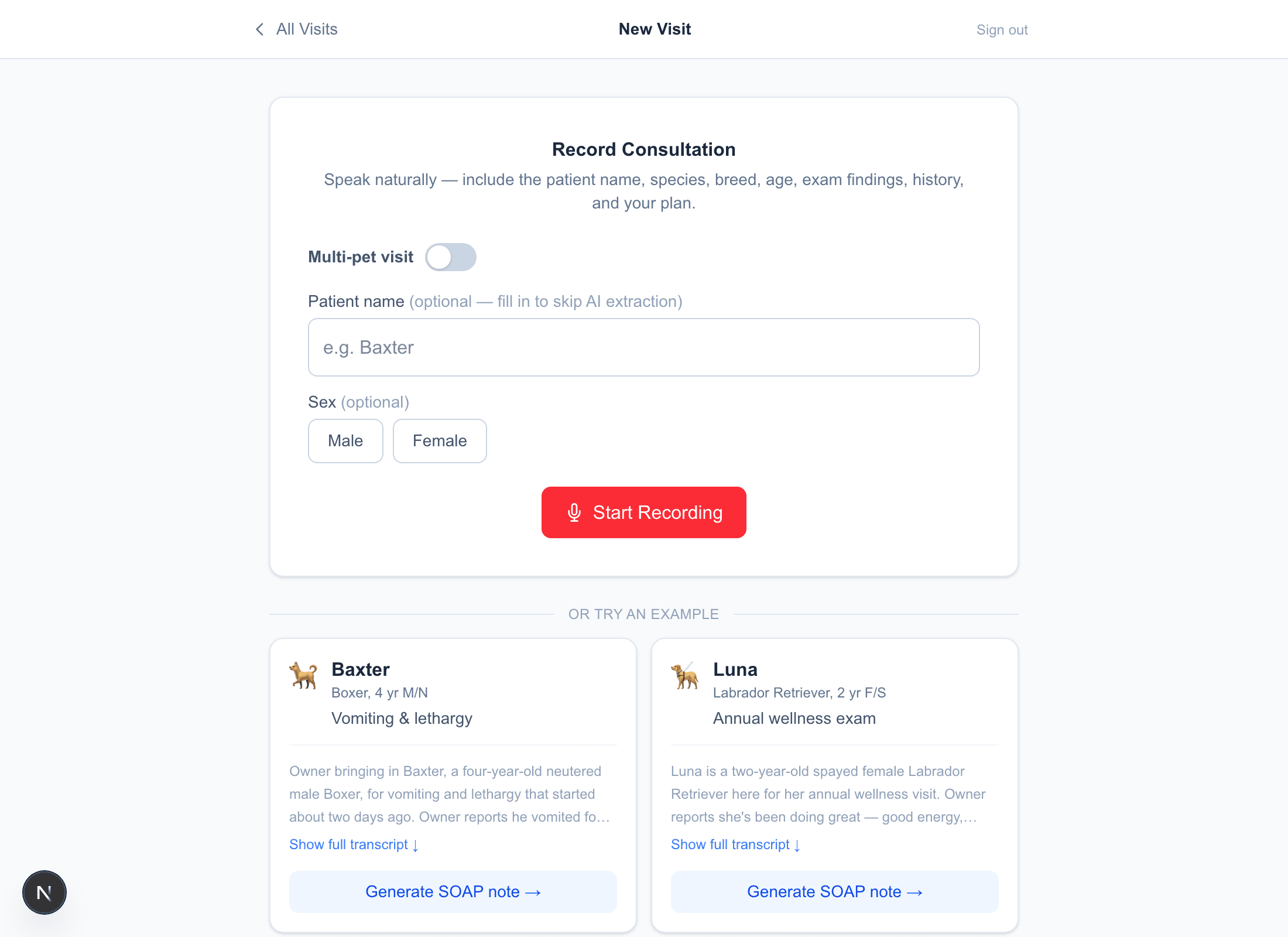
A clean, structured note every time.
Subjective, Objective, Assessment, and Plan, filled in from what was actually said. Want a change? Ask in plain English, like tighten the assessment or add a recheck in two weeks, and the note rewrites itself.
- Full SOAP and a quick overview
- Discharge summaries for owners
- Plain-English refinement requests
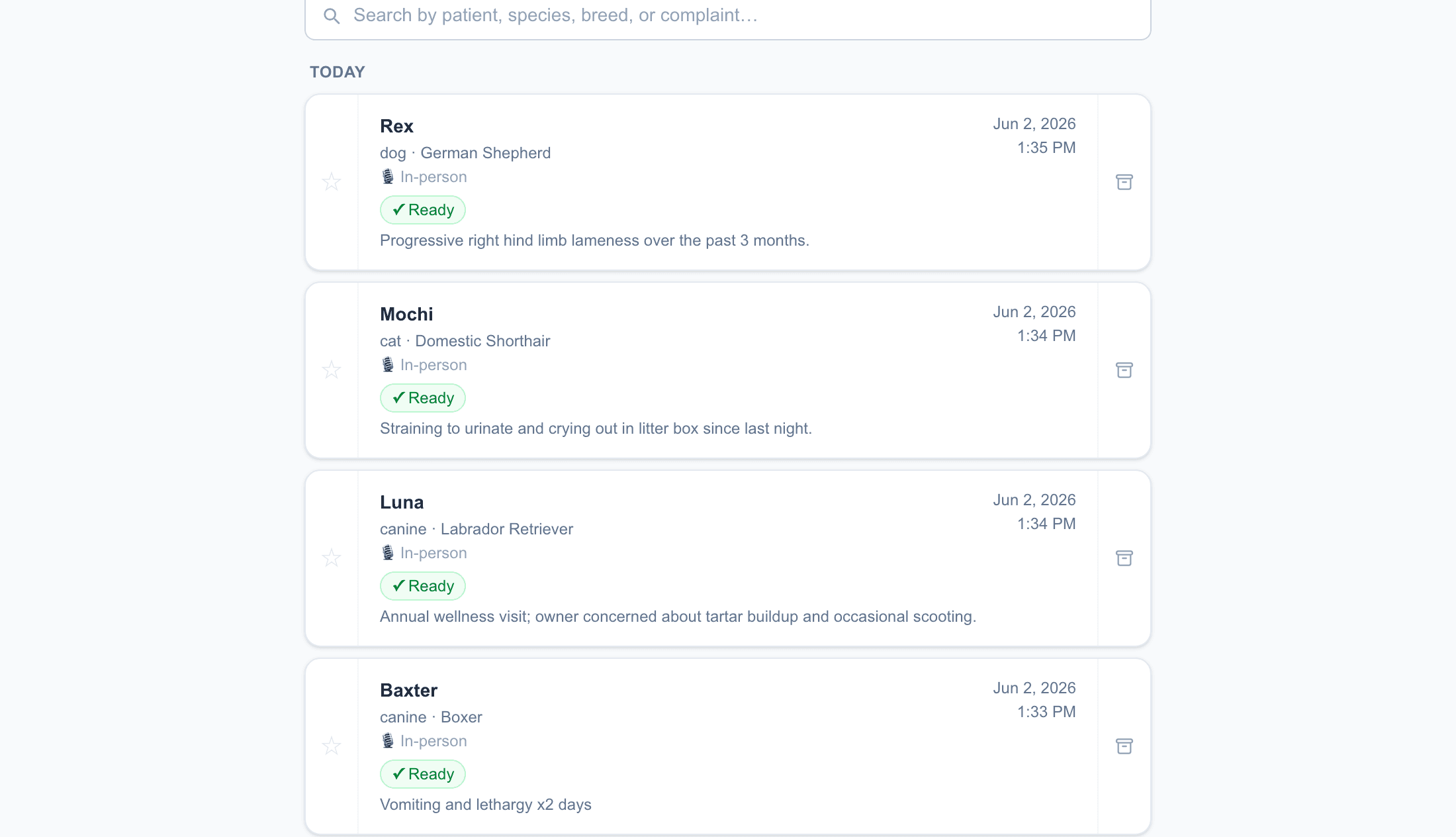
Every visit, in one place.
All your notes land in a searchable list you can filter by patient, species, breed, or chief complaint. Star the ones you need again and share a read-only link with a colleague in a tap.
- Search and filter across visits
- Star and archive
- Shareable read-only links
It learns how you like your notes.
Every time you tweak a note, VetScribe pays attention. After a handful of edits it builds a profile of your style from your feedback and applies it to every new note automatically, so you correct less and finish faster the more you use it.
- Distilled from your own refinements, not a generic template
- Works for both SOAP notes and client discharge summaries
- Quietly updates in the background as your preferences shift
- Keep assessments to two or three tight sentences
- Always include a recheck timeframe in the plan
- Use metric units (kg, °C) throughout
- Write the plan as a numbered list
Everything in the box
Structured SOAP notes
Subjective, Objective, Assessment, Plan, auto-filled from the conversation and ready to edit.
Discharge summaries
Client-friendly takeaways generated alongside each visit so owners leave with clear instructions.
Multi-pet visits
One consultation, multiple patients. Each pet gets its own note from a single recording.
Refinement requests
Tell VetScribe what to change in plain English and it rewrites the note for you.
Learns your style
Builds a profile from your feedback so notes match how you write, with less correcting over time.
Phone consultations
Have VetScribe join a phone call to record and transcribe remote consults end to end.
Shareable links
Generate a read-only link to send a finished note to a colleague or specialist.
“VetScribe has saved me hundreds of hours. My notes are done before the patient even leaves the room, and the discharge summaries are something I can actually hand to an owner. I genuinely can’t imagine going back to typing them up myself.”
Under the hood
A Next.js web app and an Expo (React Native) mobile app, backed by Supabase. Deepgram handles speech-to-text, Anthropic’s Claude writes the notes, and Twilio powers the phone integration. Everything is encrypted in transit, audio is deleted automatically after about six months, and each user only ever sees their own visits.
Get your evenings back.
Let the paperwork write itself so you can focus on the patient in front of you.
Log in to VetScribe